






 ₹https://veterinary-hospital.sanchuanimalhospital.com/sanchu/animal-hospital-in-chennai/animal-hospital-in-valasaravakkam/sanchu-animal-hospital-24x7-valasaravakkam-chennai-in-valasaravakkam-chennai--35LalP/articles/when-vomiting-is-not-normal-warning-signs-every-pe--dbbd96ee-06f1-427e-9c24-d1efa85e6add
Sanchu Animal Hospital 24X7 | Valasaravakkam, Chennai, Valasaravakkam, chennai
Pet Boarding, Pet Store and Hospital in Valasaravakkam, Chennai, Tamil Nadu
No 17, Vaigai Street, Palaniappa Nagar, Valasaravakkam, chennai, tamil nadu - 600087
Request A Call Back
Sanchu Animal Hospital 24X7 | Valasaravakkam, Chennai Social Feeds in Valasaravakkam, chennai
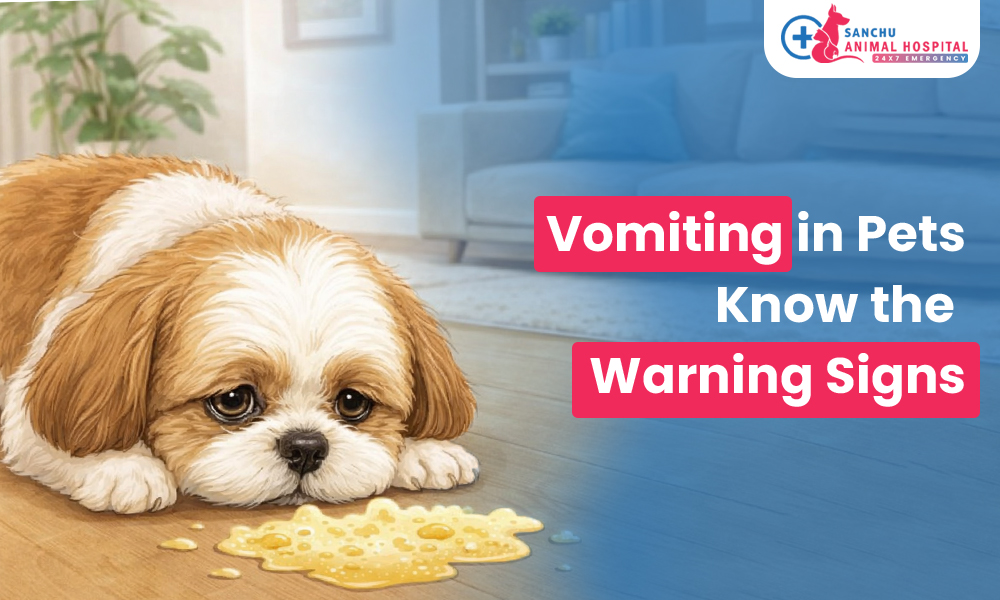
When Vomiting Is Not Normal: Warning Signs Every Pet Parent Should Know
Seeing your pet vomit can be alarming but not every episode is a medical emergency. Pets explore the world with their mouths, eat too fast at times, or react to minor dietary changes. However, for pet parents in Valasaravakkam, chennai, knowing when vomiting crosses the line from “normal” to “dangerous” is critical.
At Sanchu Animal Hospital, we often see cases where early warning signs were missed simply because vomiting was assumed to be harmless. Understanding what your pet’s body is trying to tell you can prevent serious complications.
Is Occasional Vomiting Normal in Pets?
Yes occasional vomiting can happen due to:
Eating too quickly
Swallowing fur (especially in cats)
Minor dietary changes
Mild stomach irritation
If your pet vomits once, remains active, eats normally afterward, and shows no other symptoms, close observation may be enough.
When Vomiting Is NOT Normal
Vomiting becomes a red flag when it is frequent, persistent, or paired with other symptoms. This is often the body’s way of signalling internal distress that requires medical attention.
Warning Signs Every Pet Parent Should Never Ignore
1. Repeated Vomiting
If your pet vomits:
More than once in 24 hours
Multiple days in a row
This may indicate infections, intestinal blockages, toxin exposure, or organ-related issues.
2. Vomiting With Lethargy or Weakness
A pet that vomits and then:
Sleeps excessively
Avoids movement
Appears unusually tired
could be suffering from dehydration, infection, or systemic illness.
3. Blood in Vomit
Blood may appear:
Bright red (fresh bleeding)
Dark brown or coffee-ground-like (internal bleeding)
This is an immediate emergency and should never be delayed.
4. Vomiting With Diarrhoea
The combination of vomiting and diarrhoea can quickly lead to:
Severe dehydration
Electrolyte imbalance
Shock, especially in puppies and senior pets
Prompt veterinary intervention is essential.
5. Loss of Appetite or Weight
Vomiting that accompanies:
Refusal to eat
Sudden weight loss
may signal liver disease, kidney issues, pancreatitis, or chronic gastrointestinal disorders.
6. Vomiting in Puppies, Kittens, or Senior Pets
Young and elderly pets are high-risk. Even mild vomiting can escalate rapidly due to:
Weak immune systems
Lower fluid reserves
Underlying age-related conditions
Early diagnosis saves lives.
Common Causes of Abnormal Vomiting
Persistent vomiting may be linked to:
Gastritis or intestinal inflammation
Parvovirus or other infections
Parasites or tick-borne illnesses
Foreign body ingestion
Kidney or liver disease
Food allergies or intolerance
Toxin exposure
Identifying the cause requires proper diagnostics not guesswork.
Why Early Diagnosis Matters
Delaying treatment can turn a manageable condition into a critical emergency. Early veterinary evaluation allows:
Faster recovery
Reduced treatment costs
Lower risk of complications
Better long-term outcomes
Vomiting is a symptom, not a diagnosis treating it early prevents deeper damage.
How Sanchu Animal Hospital Evaluates Vomiting Cases
Every vomiting case is approached with precision and care through:
Thorough clinical examination
In-house laboratory testing for rapid results
Advanced diagnostics such as X-ray, ultrasound, ECG, and echocardiography when required
Continuous monitoring for dehydrated or critical patients
Night Emergency & Critical Care Unit for urgent cases
Personalised medication support through the in-house pharmacy
Pets needing observation benefit from a well-sanitised, non-overcrowded inpatient facility designed for stress-free recovery.
What Pet Parents Can Do Before Reaching the Vet
While heading for veterinary care:
Do not force food or water
Avoid home remedies or human medications
Note the frequency, colour, and contents of vomit
Keep your pet warm and calm
This information helps veterinarians diagnose faster and more accurately.
Conclusion
Vomiting is your pet’s way of asking for help and knowing when to listen can make all the difference. While occasional vomiting may not be serious, repeated or severe episodes should never be ignored. Timely veterinary care can prevent complications, reduce suffering, and even save your pet’s life.
If your pet shows warning signs, consult Sanchu Animal Hospital in Valasaravakkam, chennai. With experienced veterinarians, advanced diagnostics, Night emergency care, and compassionate support, your pet’s health is always in safe hands.
Because when it comes to your pet, early action is always the best protection.