







 ₹https://veterinary-hospital.sanchuanimalhospital.com/sanchu/animal-hospital-in-chennai/animal-hospital-in-valasaravakkam/sanchu-animal-hospital-24x7-valasaravakkam-chennai-in-valasaravakkam-chennai--35LalP/articles/your-cat-is-not-just-being-weird-what-feline-behav--e2ecf202-10d6-4ca0-b5fb-a02d53a7cc61
Sanchu Animal Hospital 24X7 | Valasaravakkam, Chennai, Valasaravakkam, chennai
Pet Boarding, Pet Store and Hospital in Valasaravakkam, Chennai, Tamil Nadu
No 17, Vaigai Street, Palaniappa Nagar, Valasaravakkam, chennai, tamil nadu - 600087
Request A Call Back
Sanchu Animal Hospital 24X7 | Valasaravakkam, Chennai Social Feeds in Valasaravakkam, chennai
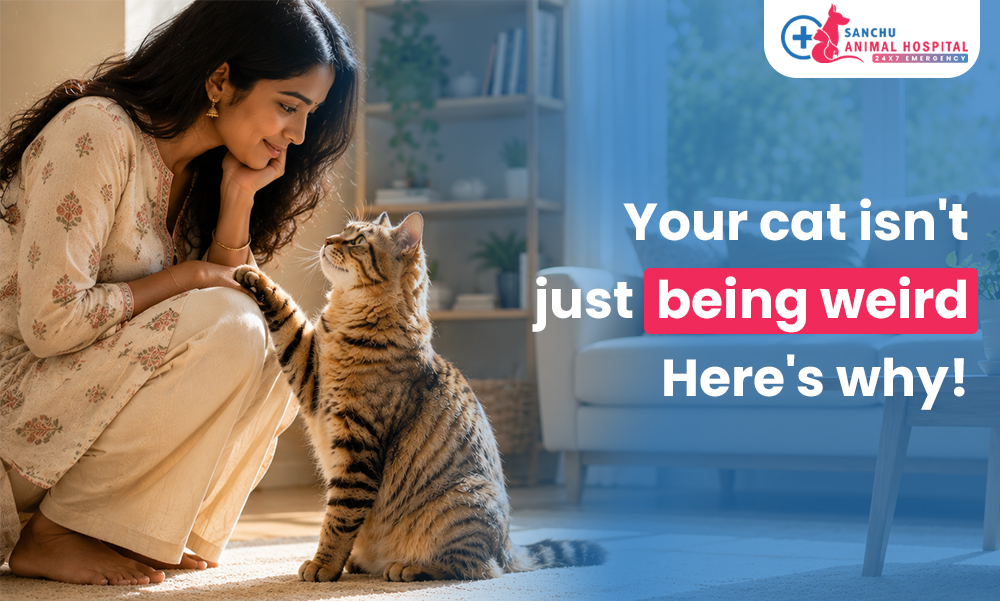
Your Cat Is Not "Just Being Weird" — What Feline Behaviour in Valasaravakkam, chennai Actually Means
Cats are genuinely fascinating to live with. One minute they're curled into a perfect croissant beside you, completely at peace with the universe. The next they're sprinting flat-out from the living room to the bedroom for reasons known only to themselves.
A lot of pet parents shrug all of this off as part of the unknowable mystery of cats. And yes, cats absolutely do have their own quirky personalities — but their behaviour is also doing real work. Most of what they do is telling you something specific about their emotions, their comfort level, or their health.
This cat behaviour guide India pet parents can actually use is here to help. For cat parents in Valasaravakkam, chennai especially, learning to read your cat properly is one of the simplest ways to build a stronger bond and spot health concerns early — before they turn into something serious.
Why Understanding Cat Behaviour Matters
Cats aren't dogs. Where a dog will openly broadcast discomfort, fear, or pain, a cat is far more subtle — sometimes painfully so. Their cat body language and behavioural shifts often hold the only clues you'll get about how they're really feeling.
Once you start spotting the common signals, you can:
Communicate with your cat more easily
Help reduce their stress and anxiety
Catch health concerns early
Make their environment more comfortable
Build a deeper, calmer relationship with your pet
So let's walk through the most common cat behaviours and what each of them actually means — a proper start to understanding cats on their own terms.
Why Does My Cat Knead Soft Surfaces?
Kneading is that rhythmic in-and-out motion where your cat pushes their paws against a blanket, cushion, or your unsuspecting lap.
What It Usually Means
Comfort and deep relaxation
A clear sign of affection and trust
A leftover from kittenhood, when they kneaded their mother during nursing
When a cat kneads, they're usually in their happy place. It's one of the highest compliments they can pay you.
When to Be Concerned
Kneading itself is completely normal. But if your cat suddenly stops doing the things they used to enjoy, that's worth paying attention to — it can hint at discomfort or illness underneath.
The Famous Cat Zoomies: Why Do Cats Suddenly Run Around?
Almost every cat owner has witnessed the "zoomies" — those spontaneous bursts of speed where your cat tears through the house like they've just remembered something urgent.
Common Reasons
Pent-up energy with nowhere to go
Hunting instincts firing up
That weird post-litter-box excitement (genuinely a thing)
Just plain playfulness
Zoomies are especially common in indoor cats, who often don't get enough physical outlets through the day.
How to Help
Bring in interactive toys that get them moving
Make daily play sessions a habit
Set up climbing space — cat trees, shelves, anywhere up high
Regular movement isn't just about fitness. It keeps cats mentally happier too.
Why Does My Cat Hide?
Cats naturally seek out quiet spots when they want rest or a bit of solitude.
Normal Hiding Behaviour
During loud noises like fireworks or thunderstorms
When unfamiliar visitors arrive
While settling into a new home or new environment
When Hiding Becomes a Warning Sign
If your cat suddenly starts hiding far more than usual, it can be a signal that something's off:
Stress
Anxiety
Pain
Illness
Hiding combined with other shifts — change in appetite, less grooming, lower activity — should never be brushed off. That's one of the most reliable patterns to track.
Excessive Meowing: What Is Your Cat Trying to Say?
Cats save most of their vocalising for humans. They rarely meow at each other once they grow up — but they'll happily talk to you all day.
Common Reasons for Meowing
Hunger (the obvious one)
Asking for attention
Greeting you when you walk in
Wanting to play
Excessive Meowing May Indicate
Stress or anxiety
Some kind of discomfort
Age-related cognitive changes in older cats
A medical condition that needs checking
If your normally quiet cat suddenly turns into a chatty one, that's worth a vet visit.
Why Do Cats Scratch Furniture?
Scratching isn't a behaviour problem — it's a completely natural cat thing, even if your sofa wishes otherwise.
Reasons Cats Scratch
Marking their territory with scent glands in their paws
Stretching their muscles properly
Keeping their claws healthy
Letting off a bit of stress
How to Manage It
Bring in proper scratching posts
Add cat trees and scratching pads in different rooms
Reward them when they scratch the right things
Avoid punishment — it tends to make cats more anxious, which usually makes the scratching worse, not better.
Understanding Cat Tail Language
A cat's tail is one of the most expressive parts of their whole body — once you know what to look for, it's almost like reading their mood out loud.
Tail Held High
Usually means:
Confidence
A happy cat
Friendly intentions toward whoever they're approaching
Puffing Up
Often signals:
Fear
Feeling cornered or threatened
Defensive posture (the cat is making themselves look bigger)
Rapid Tail Flicking
Tends to suggest:
Irritation
Frustration
Overstimulation — usually a cue to back off from petting
Tail Wrapped Around You
A genuinely sweet one. It typically shows:
Affection
Trust
Real social bonding
Reading these subtle signals helps you respond to your cat's mood instead of accidentally misreading it.
Common Signs of Stress in Cats
Stress hits cats harder than people often realise, and it shows up in both behaviour and physical health.
Watch for these cat stress signs:
Hiding far more than usual
Reduced appetite
Excessive grooming (sometimes to the point of bald patches)
Aggressive behaviour
Changes in litter box habits
Excessive vocalisation
Common triggers:
Moving to a new home
A new pet entering the household
Major changes to routine
Loud or busy environments — something cat parents in Valasaravakkam, chennai know well during festival seasons or in busier apartment buildings
Underlying medical issues
Catching the stress early prevents it from settling into long-term behavioural problems that are harder to undo.
Behaviour Changes That May Signal Illness
Sometimes the first sign that something medical is wrong shows up as a behaviour shift rather than an obvious physical symptom. These are the cat behavior changes worth taking seriously.
Book a vet visit if your cat is showing:
A sudden loss of appetite
Unusual lethargy
Aggression that's out of character
Persistent hiding
Excessive meowing
Changes in how much they're drinking
Litter box accidents
Big personality shifts
Cats are remarkable at hiding pain and discomfort — which is exactly why these behavioural clues matter so much.
Supporting Your Cat's Emotional Well-Being
A few small daily habits go a long way toward keeping your cat feeling secure and content.
Helpful Tips
Keep their routine consistent — cats rely on predictability more than dogs do
Build in proper enrichment and playtime
Offer safe hiding spots they can retreat to
Keep litter boxes properly clean
Make sure fresh food and water are always available
Schedule regular health check-ups
A happy cat is, almost always, a healthy cat.
When Professional Guidance Matters
Plenty of feline behaviour is completely normal — but sudden or persistent changes should never be ignored.
At Sanchu Animal Hospital, experienced veterinarians help pet parents make sense of both the physical and behavioural sides of feline health. Whether it's a routine wellness check, diagnostics for something specific, stress-related concerns, or a deeper medical evaluation, the team focuses on finding the underlying cause of behaviour changes — not just managing the symptoms.
With advanced diagnostic facilities, an experienced veterinary team, and a genuinely compassionate approach to care, Sanchu Animal Hospital supports cats through every stage of life.
Final Thoughts
Cats can seem mysterious, but they're communicating with you almost constantly. Kneading, zoomies, hiding, scratching, vocal changes — each one tells you something specific about how your cat is feeling.
For cat parents in Valasaravakkam, chennai, understanding cats properly is one of the best things you can do for their physical and emotional wellbeing. When behaviour shifts seem unusual or stick around longer than they should, timely guidance from a trusted veterinary team like Sanchu Animal Hospital can help keep your feline companion healthy, comfortable, and properly understood — for many years of curled-up afternoons to come.