





 ₹https://veterinary-hospital.sanchuanimalhospital.com/sanchu/animal-hospital-in-chennai/animal-hospital-in-valasaravakkam/sanchu-animal-hospital-24x7-valasaravakkam-chennai-in-valasaravakkam-chennai--35LalP/articles/monsoon%E2%80%99s-hidden-threat-why-parvovirus-peaks-during-the-monsoon-season--971f5d0a-056a-4967-89e6-4b3e85fd8417
Sanchu Animal Hospital 24X7 | Valasaravakkam, Chennai, Valasaravakkam, chennai
Pet Boarding, Pet Store and Hospital in Valasaravakkam, Chennai, Tamil Nadu
No 17, Vaigai Street, Palaniappa Nagar, Valasaravakkam, chennai, tamil nadu - 600087
Request A Call Back
Sanchu Animal Hospital 24X7 | Valasaravakkam, Chennai Social Feeds in Valasaravakkam, chennai
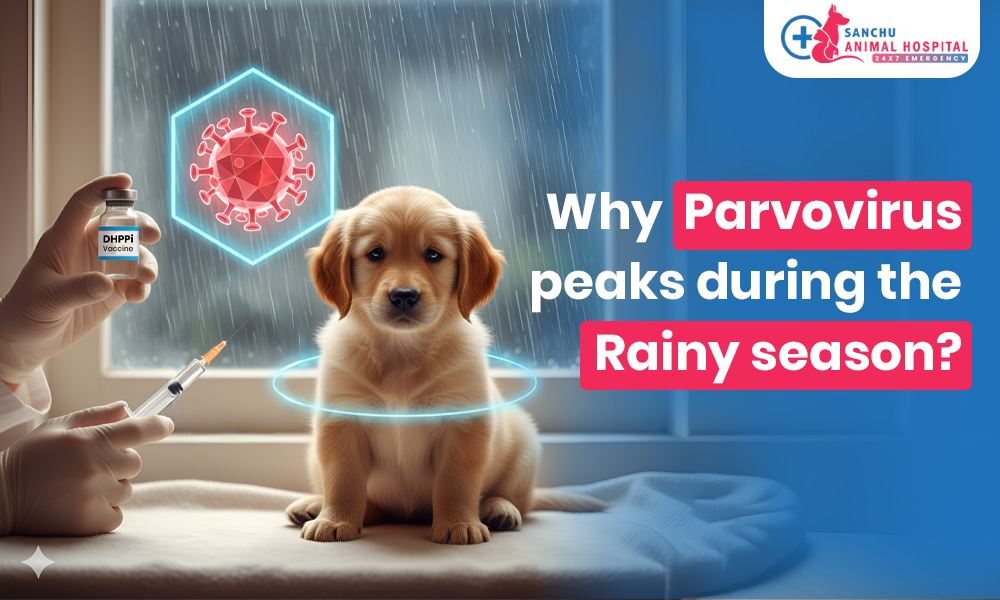
Monsoon’s Hidden Threat: Why Parvovirus Peaks During the Monsoon Season?
When the rains arrive, pet owners
often focus on keeping their furry companions dry and comfortable — but there’s
another invisible danger lurking in the damp environment: Canine Parvovirus (CPV). This highly contagious viral disease can
spread rapidly during the monsoon, especially among unvaccinated dogs, leading
to severe illness and even death.
Understanding why Parvovirus peaks during the monsoon and how vaccination acts as a vital shield can help you safeguard your pet’s health all year round.
Why Does
Parvovirus Spread More During Monsoon?
Monsoon creates the perfect breeding ground for viruses and
bacteria. The humidity and stagnant water help the Parvovirus survive
longer in the environment. Even the tiniest trace of infected feces in soil,
puddles, or communal play areas can expose your pet.
Dogs often sniff, lick, or walk on contaminated surfaces during walks — and that’s all it takes for the virus to enter their system. Puppies and unvaccinated adult dogs are especially vulnerable.
How Parvovirus
Affects Your Dog
Once infected, the virus attacks
rapidly dividing cells in the intestinal lining, bone marrow, and sometimes the
heart. Common symptoms of Parvovirus
include:
●
Severe vomiting and bloody
diarrhea
●
Loss of appetite and extreme
fatigue
●
Dehydration and fever
●
Sudden weight loss or collapse
These symptoms progress quickly, and without immediate veterinary intervention, the condition can become fatal.
The Critical
Role of Vaccination
The Parvovirus vaccine is the most effective protection your pet can
have. It helps the immune system build strong antibodies that recognize and
fight the virus before it causes harm.
Veterinarians recommend:
●
Initial vaccination for puppies
(typically between 6–8 weeks of age)
●
Booster doses as per the vet’s advice to
maintain immunity throughout life
Skipping even one dose can leave your dog unprotected, particularly during high-risk monsoon months.
Prevention
Beyond Vaccination
While vaccination is the strongest
defense, combining it with daily hygiene practices further reduces risk:
●
Keep your dog’s living area
clean and dry.
●
Avoid walks in areas where
other dogs frequently relieve themselves.
●
Regularly disinfect bowls,
toys, and bedding.
●
Maintain a balanced diet and
hydration to support immunity.
● Schedule routine health checkups with a trusted vet in Valasaravakkam, chennai.
When to Visit
a Vet Immediately
If your pet shows even mild signs of vomiting, lethargy, or diarrhea during the monsoon, don’t wait. Visit Sanchu Animal Hospital in Valasaravakkam, chennai for expert diagnosis and timely care. Early intervention and supportive treatment for Parvovirus can make all the difference in recovery.
Protect Your
Pet Before It’s Too Late
Parvovirus is preventable — but only
if you stay one step ahead. Ensure your pet’s vaccination schedule is up to date and continue regular health
checkups, especially during monsoon.
Book your dog’s Parvovirus vaccination at Sanchu Animal Hospital in
Valasaravakkam, chennai today. Our experienced
veterinarians provide advanced pet care and vaccination services trusted by pet
families across chennai.
Call or visit us today — because prevention is the best protection.